


Why Real Estate Remains a Top Investment Choice
If you’ve ever dreamed of building wealth, creating passive income, or achieving financial independence, real estate investing is one of the most proven paths to get there. Unlike stocks or crypto, real estate offers tangible assets - properties you can see, touch, and improve. For beginners, however, the world of property investing can seem overwhelming.
This 101-level crash course in real estate investing is designed to break things down in simple terms. You’ll learn the basics of how real estate works, the types of investments available, strategies you can use, and common pitfalls to avoid.
What Is Real Estate Investing?
At its core, real estate investing is about buying, owning, managing, or selling property for profit. But not all real estate investing looks the same. Some people flip houses, others hold rental properties, and many prefer passive investment vehicles like REITs.
The Basics of Property Ownership
Owning real estate can be as simple as purchasing a single-family rental home, or as complex as managing a large apartment building. Ownership gives investors rights to:
- Collect rental income.
- Benefit from property appreciation.
- Leverage tax incentives.
Active vs. Passive Real Estate Investing
- Active Investing: Involves direct management—buying rentals, flipping houses, or developing land.
- Passive Investing: Involves hands-off strategies like investing in REITs (Real Estate Investment Trusts) or joining syndications.
Why Start with Real Estate? Key Advantages
Real estate has been a cornerstone of wealth-building for centuries. Here’s why beginners are often drawn to it:
Cash Flow Potential
Rental properties can generate steady monthly income, often covering expenses while leaving extra profit.
Appreciation and Long-Term Growth
Over time, property values tend to rise, especially in growing markets. This appreciation builds long-term wealth.
Tax Benefits and Deductions
Investors often benefit from deductions on:
- Mortgage interest
- Property taxes
- Depreciation
- Repairs and improvements
Leverage and Wealth Building
Unlike many investments, real estate allows you to use borrowed money (mortgages, loans) to control high-value assets which can multiply returns if done wisely.
Common Types of Real Estate Investments
Not all real estate investments are created equal. Beginners should understand the main categories:
Residential Properties (Single-Family, Duplexes, Condos)
These are the most common entry point. Investors rent them out for steady income and long-term appreciation.
Commercial Properties (Offices, Retail, Industrial)
Higher risk but potentially higher returns. Typically leased to businesses on long-term contracts.
Vacation Rentals and Short-Term Rentals
Platforms like Airbnb and VRBO have made short-term rentals a booming market, especially in tourist areas.
REITs (Real Estate Investment Trusts)
Publicly traded companies that own real estate. They allow investors to gain exposure without owning property directly.
Land and Development Opportunities
Raw land or lots for development can yield major profits but they carry higher risks and require expertise.
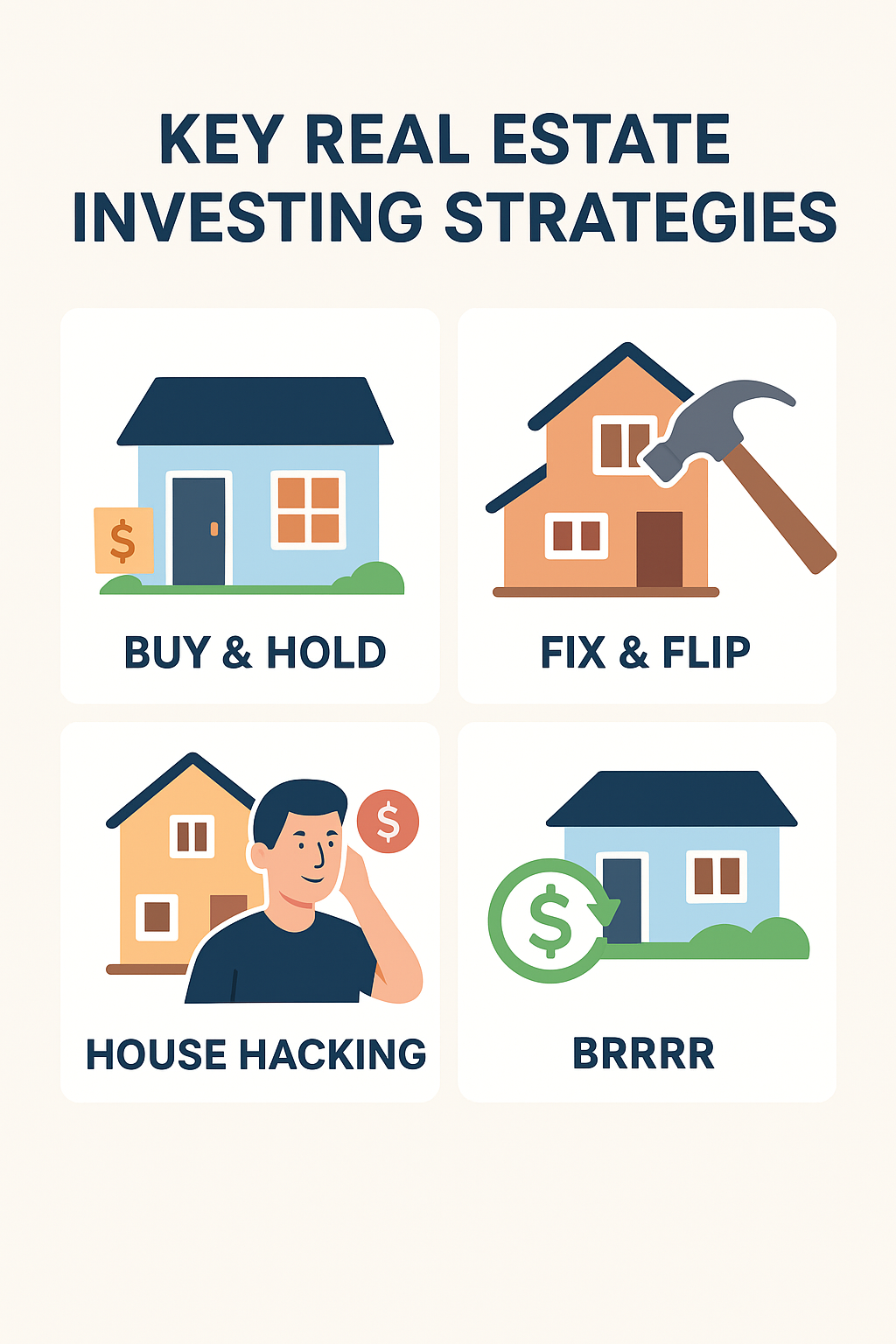
Key Real Estate Investing Strategies
There isn’t just one way to invest in property. Beginners should understand the core strategies before deciding which fits their goals, risk tolerance, and budget.
Buy and Hold
- How it works: Purchase a property, rent it out, and hold it long-term.
- Benefits: Steady rental income and appreciation over time.
- Best for: Beginners seeking predictable, long-term wealth building.
Fix and Flip
- How it works: Buy undervalued properties, renovate them, and sell quickly for profit.
- Benefits: Potentially high short-term gains.
- Challenges: Requires capital, renovation knowledge, and market timing.
Wholesaling
- How it works: Find undervalued deals, get them under contract, and sell the contract to another investor.
- Benefits: Minimal upfront investment needed.
- Challenges: Requires strong networking and deal-finding skills.
House Hacking
- How it works: Live in part of a property while renting out the other units or rooms (e.g., duplex).
- Benefits: Offsets your housing costs while building equity.
- Best for: First-time buyers who want to reduce living expenses.
BRRRR Strategy (Buy, Rehab, Rent, Refinance, Repeat)
- How it works: Buy distressed property, fix it, rent it out, refinance to pull equity, then reinvest.
- Benefits: Builds a portfolio quickly using recycled capital.
- Challenges: Requires strong financing options and good project management.
How to Analyze a Real Estate Deal
Not all properties are good investments. Proper deal analysis helps avoid costly mistakes.
Understanding ROI (Return on Investment)
A key metric to measure profitability. ROI = (Net Profit ÷ Total Investment) × 100.
Cap Rate (Capitalization Rate)
The cap rate is a quick way to compare investment properties based on the income they produce. It’s calculated by dividing a property’s net operating income (NOI) by its purchase price. A higher cap rate generally means a better return relative to cost, but it can also mean higher risk.
Cash-on-Cash Return
This metric shows how much cash you earn compared to the actual cash you’ve invested (not the property’s full price). It’s calculated by dividing annual pre-tax cash flow by your total cash invested. This helps investors see their real, spendable return after financing is factored in.
Location and Market Research
Real estate’s golden rule: location, location, location. Look for:
- Climate
- Job growth
- Population trends
- School districts
- Proximity to amenities
Risk Assessment
Ask yourself:
- What happens if rents drop?
- How will vacancies affect cash flow?
- Are property taxes or insurance likely to rise?
Financing Your First Investment Property
Money often feels like the biggest barrier, but there are multiple financing options.
Traditional Mortgages
Best for single-family rentals or small properties. Typically requires:
- 20–25% down payment.
- Good credit score.
- Stable income.
Private Lenders and Hard Money Loans
- Private Lenders: Individuals who loan money at negotiated terms.
- Hard Money Loans: Short-term, high-interest loans—commonly used for fix-and-flip projects.
Partnerships and Syndications
Pooling resources with other investors to buy larger deals. This reduces individual risk and capital requirements.
Mistakes to Avoid as a Beginner Investor
Learning from others’ mistakes is often the best way to protect your investment.
Overleveraging Debt
Taking on too many loans without enough cash reserves can lead to foreclosure during downturns.
Ignoring Property Management Costs
Even if you self-manage, factor in repairs, vacancies, and tenant turnover.
Failing to Research Local Markets
A profitable rental in one city might flop in another. Always analyze local supply, demand, and rental rates.
Building a Real Estate Portfolio Over Time
Once you’ve completed your first investment, scaling becomes easier.
Diversification Strategies
Spread investments across:
- Property types (residential, commercial).
- Geographic markets.
- Passive (REITs) vs. active (rentals).
Scaling from One Property to Many
Use appreciation, refinancing, and profits from one property to buy the next. This snowball effect is how many investors build wealth over decades.
Conclusion: Taking Your First Steps in Real Estate Investing
Real estate investing doesn’t have to be intimidating. By starting small, doing thorough research, and choosing the right strategy, beginners can create reliable cash flow and long-term wealth. The key is to take action, whether that means analyzing your first deal, networking with other investors, or simply reading more on the subject, or reaching out for a personalized and free consultation.
Remember: Every successful investor was once a beginner who took that first step.
📞 Call us today at 941-993-9380
📧 Email: amy@coastalkeyrealty.com
🌐 Visit: www.coastalkeyrealty.com